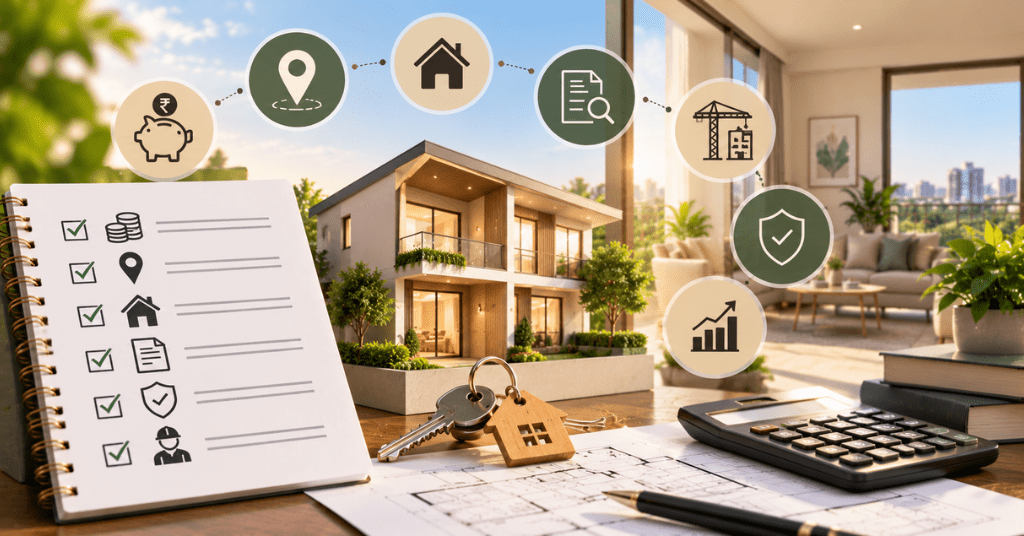
15 First-Time Homebuyer Tips: What Every New Buyer Should Know

15 First-Time Homebuyer Tips: What Every New Buyer Should Know

Owning your own house is something to be very happy about, but at the same time, it might be very scary. From figuring out how much you can pay for the house to choosing the appropriate location, verifying legal papers, applying for a loan, and understanding the contract, there are several factors that need to be taken into consideration.

Being a first-time home buyer, having an action plan may make the procedure easier and prevent you from costly errors. Be it purchasing an apartment for your family or investing in real estate, these first home buyer tips will be useful for you.

1. Determine Your Realistic Budget

When choosing properties, set out the figure you can actually afford first.

The budget cannot be solely determined by the total cost of housing that can be provided by the bank. Think about your monthly income, other financial responsibilities, savings, and future spending.

Keep in mind other costs that will go beyond just the cost of the property itself, which include:

  • Down payment
  • Stamp duty and registration
  • Home loan processing fees
  • Maintenance deposits
  • Parking fees, where necessary
  • Interior design and furnishing costs
  • Moving costs
  • Others

A realistic budget can help you avoid getting financially burdened after buying your own house.

2. Save for the Down Payment

The down payment is one of the largest initial costs in acquiring a home.

Commence saving early and keep aside a special fund for your home acquisition. Do not use each rupee of your savings in making your down payment, as you must have some savings even after acquiring your property.

Some savings will help you cope with any unforeseen expense without being dependent on any further debt.

3. Know About Home Loan Options

Home loans are significant for most first-time buyers.

Consider home loan options based on their:

  • Rate of interest
  • Loan tenure
  • Processing charges
  • Prepayment conditions
  • Other charges
  • Total interest payable

Do not consider a loan simply because it comes with the lowest rate of interest. Be clear about its total cost and terms.

It is better to know about an EMI within your budget capacity rather than borrowing a maximum amount.

4. Choose the Right Location

Location is crucial, as it affects your way of living, the price of your property, and even resale or rental value in the future.

When buying your first home, think about your daily commute and ease of access to amenities.

Think about:

  • Road connectivity and transport
  • Schools and colleges
  • Hospitals
  • Entertainment and shopping destinations
  • Job centers
  • Places to eat and other facilities
  • Current and upcoming infrastructure

An excellent-looking flat that is located inaccessibly is not a good choice if it causes you troubles during your everyday routine.

5. Think about the Future

Do not select a home on the basis of your present needs.

Think about how your needs might change in five to ten years. In case you are planning to expand your family, work from home, or accommodate your parents, then it will have an effect on your choice of property.

Think about:

Will I still need this house in several years?

6. Research the Developer

The developer you choose may be just as critical as the real estate asset.

To find out whether you are dealing with a good developer, study his past projects, quality of construction, project delivery record, customer feedback, and reputation.

Choose a developer who stresses openness, quality, planning, and client experience instead of purely relying on marketing.

For a newbie buyer, it is much easier to deal with a trustworthy developer.

7. Check the RERA Registration

Another vital tip for a first-time home buyer is checking the regulatory information about your purchase.

For those real estate assets regulated by the Real Estate (Regulation and Development) Act, 2016, contact the appropriate state RERA regulator to check the registration and disclosures of the project.

Among the information you need to consider, there are:

  • Project registration
  • Promoter information
  • Disclosed completion period
  • Project description
  • Disclosures and approvals
  • Construction stage

However, RERA registration is only a small part of due diligence.

8. Inspect the Property Carefully

Never base your buying decision entirely on brochures, photographs, or even a sample apartment.

In case you are buying a ready-to-move-in flat, be sure to check the unit yourself.

Check:

  • Room dimensions
  • Light and ventilation
  • Floors and finishings
  • Doors and windows
  • Electrical connections
  • Plumbing
  • Kitchen layout
  • Bathroom fittings
  • Storage
  • Balcony
  • Common areas

In case of an under-construction property, crosscheck the agreement against the plans and specifications offered by the developer.

9. Get Clarification on Carpet Area and Total Area

There can be many terms associated with properties, and some may even create confusion for first-time buyers.

Get clarity on carpet area and built-up area, among other relevant areas.

It is essential to know about carpet area, especially since it helps you understand how much space you can use inside the flat.

Instead of comparing flats based on their total area, you should compare them based on their usable area and layout.

10. Check All Legal Documents

Never overlook the legal due diligence.

Before buying the property, ensure that all the required documents about ownership, title, approvals, development rights, etc., have been checked out.

According to the requirement, such documents may include:

  • Documents of title
  • Documents regarding approved building plans
  • Permissions that may be needed
  • Records relating to encumbrance
  • Agreement of sale
  • Documents of RERA
  • Tax records of the property
  • Occupation or completion documents (if any)

As property laws and documentation vary from place to place, you should get the documents checked by a property lawyer.

11. Calculate Total Cost of Ownership

The cost of your property is not the same as its purchase price.

It includes both recurring and non-recurring costs associated with your ownership of the property.

Such costs may include maintenance charges, taxes on the property, utility bills, insurance, interest payable, interiors, repair, and other costs involved in owning the house.

This is especially important for the first-time buyers because a cost-effective purchase price can prove costly due to these costs.

12. Compare Multiple Properties

Do not make the mistake of buying the first property you see.

Rather, shortlist some properties and compare them on the basis of:

  • Location
  • Price
  • Carpet area
  • Layout
  • Quality of construction
  • Amenities
  • Developer’s reputation
  • Connectivity
  • Possession time frame
  • Maintenance expenses
  • Further development plans

The comparison will give you a clearer idea about what kind of value you can have from your budget in the market.

13. Always Read the Agreement Before Signing It

This document is very important in the process of buying the house.

Do not blindly accept the fact that the sales person says that the agreement is always standardized.

Some points to be considered from the agreement are:

  • Specifications of the property
  • Schedule of payment
  • Possession
  • Cancellation of the deal
  • Delay
  • Maintenance issues
  • Parking facilities
  • Extra costs and charges
  • Obligations of buyer and developer

14. Do Not Ignore Resale and Future Value

Even if the property is bought mainly for your own family, you should still consider its future value.

It is impossible to foresee the future property market trends, yet location, accessibility, infrastructure, quality of construction, neighborhood, and the developer’s reputation may have an effect on the future demand.

When buying a house that will fit you at the current stage of your life and at the same time will be appealing to future buyers, you will give yourself more room for movement.

15. Don’t Rush While Making a Decision

Probably, the main first-time home buyer tip is as follows: don’t hurry.

Buying property can cost quite a lot of money, and decisions made in a hurry can bring disappointment.

Do not hurry to:

  • Visit the property several times
  • Choose between alternatives
  • Study the documentation
  • Understand your financial state
  • Discuss the issue with family
  • Investigate the neighborhood
  • Ask questions
  • Look through the contract

If a realtor tries to push you into a quick decision due to a very short deadline for the special offer, just give yourself some time to think.

What Should First-Time Homebuyers Prioritize?

For an individual buying a first-time home, it might not be easy to identify the aspects that need more consideration.

In order to help make the right decision, you may want to consider separating the decision-making process into five different categories.

  • Finance: Do you find it easy to afford this home and the expenses that go with it?
  • Location: Is the location right for you?
  • Home: Is the design and construction suitable for you?
  • Developer: Do you find the developer to be trustworthy?
  • Legality: Are there any legalities to take care of for the home?

When a home ranks well in all the above five categories, then you can proceed with confidence.

Why Choose Aryan Milestones?

Selecting your first home is not merely the selection of an aesthetically pleasing flat; you are selecting a place where you would live for many years to come.

Aryan Milestones is the creation of exquisite residential homes in Bangalore. It focuses on well-planned, good construction, use of natural light, proper ventilation, privacy, and a pleasant living environment.

The quality of construction, design, location, and the philosophy of the builder would go a long way in making your life as a homebuyer more comfortable.

While you evaluate the options that come your way, be aware that some features should take precedence over promotional discounts.

Final Thoughts for First-Time Homebuyers

Getting your first home doesn’t have to be difficult if done in a systematic manner.

This would entail knowing your financial situation, having a realistic budget, researching on locations and developers, validating all regulatory and legal aspects of the property, performing a thorough inspection of the property, and being aware of all costs associated.

Most important of all, always keep in mind that a cheap property is not always the best property. It must suit your financial capacity, style of living, future plans, and standards.

Here are some helpful first home buyer tips that could make the entire process much easier for you.

Related Blogs

Browse insights across categories to find what matters most to you.

Best Area to Invest in Bangalore for Homebuyers: Why JP Nagar Stands Out

Bangalore has emerged as one of the most popular cities in India for those who are buying homes and investing in real estate properties.

But along with selecting the ideal apartment, selecting the right locality plays an important role in determining the property value of a place. Properties that offer connectivity, social infrastructure, developed area, and other factors may be highly valued.

JP Nagar is one of the most popular residential areas in South Bangalore. The reason for the popularity of this area is its connectivity, convenience, and residential aspect.

No matter whether you are buying your first home or looking for investment property, knowing the advantages of JP Nagar will help you make an informed decision.

Let us look at why JP Nagar deserves to be considered if you are looking for the best place to invest in Bangalore.

Why Is JP Nagar a Popular Residential Destination in Bangalore?

JP Nagar is a well-established residential area in the southern part of Bangalore with well-organized residential localities and proximity to various everyday conveniences.

JP Nagar covers several phases and provides housing options in the form of independent houses, flats, commercial buildings, and gated residential societies.

Some of the factors that make it an attractive area to buy homes are listed below:

  • Established residential areas.
  • Presence of schools, hospitals, and shopping complexes.
  • Good connectivity to key roads and employment centers.
  • Options of different kinds of residential properties.
  • Parks, recreation centers, and lifestyle amenities.

As opposed to areas that have not yet developed their basic infrastructure, JP Nagar already enjoys an established residential ecosystem.

Reasons Why JP Nagar Stands Out for Property Investment

1. Strategic Location and Connectivity

Location is very crucial while assessing the various investment options for properties. The area of JP Nagar has the advantage of location, being located in South Bangalore and with easy connection with neighboring commercial and residential zones.

It has good connectivity via various roads like Bannerghatta Road, Kanakapura Road, and the NICE Road corridor. Such connectivity enables people living in the zone to reach various parts of Bangalore like Jayanagar, Banashankari, BTM Layout, and Electronic City.

Another advantage of the area is its metro connectivity. The existing Green Line is connecting some zones in JP Nagar, like Jaya Prakash Nagar and Yelachenahalli.

The upcoming metro line, the Pink Line, has an elevated portion in the JP Nagar 4th Phase and will provide better connectivity along Bannerghatta Road. 

The elevated portion covering 7.5 km has been cleared for safety in October 2026 and now awaits inauguration for passengers by the start of November 2026.

2. Well-Developed Social Infrastructure

The right choice of residential area should not only be based on nice flats or apartments but also on the availability of necessary services that can make life easy and also play a role in making it a desirable place to live in the future.

There is an excellent social infrastructure available in JP Nagar, including:

  • Educational Institutions: Availability of educational institutions such as Orchids The International School, Redbridge International Academy, etc.
  • Healthcare Services: Availability of healthcare services such as Aster Hospital, Manipal Hospital, Fortis Hospital, and many other healthcare services in nearby locations.
  • Shopping and Entertainment: There are some shopping malls like Forum South Bangalore and Nexus Vega City Mall, where one can do shopping, entertainment, and many other things.

Thus, it makes JP Nagar a good choice for families and individuals.

3. Access to Employment and Business Hubs

The employment environment of Bangalore is one of the main aspects affecting its residential property market.

The connectivity of the JP Nagar area to many business and employment centers in South Bangalore is provided by the existing road network.

Commercial developments and employment centers in the vicinity can create the demand for residential properties from professionals who need convenient accommodation.

This aspect is essential for investors in property markets since proximity to business centers may determine the demand for apartments and tenants.

4. Balanced Life Style with Parks and Recreation Facilities

In modern society, the growing number of people choose residential areas offering both convenient conditions for urban life and comfortable accommodation.

JP Nagar has a lot of parks, green spaces, restaurants, and recreational facilities contributing to the attractiveness of this locality.

Among natural sites worth mentioning in this respect, there are Sarakki Lake and Puttenahalli Lake. Also, localities have parks and places for walking.

The balance between residential and commercial zones allows residents to meet their daily needs without going a long way to do shopping.

5. Different Residential Options for Homebuyers

One of the features of JP Nagar is the diversity of the residential property options in the various phases.

Customers have access to both individual houses and apartments based on their requirements and financial capacity.

The earlier phases are usually more mature compared to the later phases, which include JP Nagar 7th Phase and JP Nagar 8th Phase.

Thus, this makes this locality significant for various categories of customers who could be families or investors.

However, there are many variations in terms of price and investment value for property based on the particular location.

Which Part of JP Nagar Should You Consider?

There are different phases in JP Nagar, each having a unique residential experience to offer.

JP Nagar Phase 

  • 1st-3rd Phase: Well-established residential colonies with good connectivity to Jayanagar and amenities available.
  • 4th-6th Phase: A combination of residential and commercial activities with good connectivity to major roads and lifestyle amenities. 
  • 7th-8th Phase: Relatively new residential layouts with good connectivity to Kanakapura Road and NICE Road

It is all about picking the right phase according to your requirements. If you are looking for well-established neighborhoods, the former might suit you better. However, if you are looking for relatively new residential layouts, then the latter might just be what you need.

It is always advisable to consider the exact location of the project and not the JP Nagar name alone.

What Should You Check Before Investing in JP Nagar?

While considering a property, there are certain important factors that should be kept in mind:

  1. Location & Accessibility: Determine the proximity of the property to metro stations, highways, and nearby places.
  2. Reputable Developer: Find out about the developer’s experience of building properties and their construction standards.
  3. Legal Documentation: See if the property is registered in RERA and other legal documentation and clearances are obtained.
  4. Amenities and Specifications: The facilities provided in the property and its specifications.
  5. Overall Cost of Investment: This would include base price, registration fees, taxes, and other costs, like for parking facilities.
  6. Future Demands: Select a property according to your family’s future demands and needs.

Final Thoughts

The selection of the right locality plays an important role in ensuring the success of real estate investments. Among the many interesting places for residence in Bangalore, JP Nagar is considered the best one owing to its developed infrastructure, connectivity options, and access to places of employment.

JP Nagar can be considered the best area in Bangalore for real estate investors considering current advantages as well as the possibilities of future connectivity.

Nonetheless, any good investment requires thorough research and realistic planning of finances along with assessing the selected property.

At Aryan Milestones, we are convinced that the house has to give more than just a nice address. Therefore, it has to be designed with comfort in mind and built with high-quality materials.

Find out all the advantages of your future home, Aryan Alturra, in JP Nagar 8th Phase.

Frequently Asked Questions (FAQs)

1. Is it a good choice to invest in JP Nagar, Bangalore?

Yes, JP Nagar can be a good choice owing to its existing residential infrastructure, connectivity by metro rail, educational institutes, healthcare services, and employment opportunities. Yet, the investment suitability will depend on the particular property and the cost of purchase.

2. Which phase is the best for buying an apartment at JP Nagar?

It will depend on you since some people like already developed locations whereas others would like to check out newly constructed residential units. It can be either one of the earlier phases or the 7th and 8th phases of JP Nagar.

3. Is JP Nagar one of the developing places in Bangalore?

JP Nagar is an established residential place and not fully emerging. Still, the current infrastructure development is adding value to the future connectivity of this locality.

4. What factors do I need to consider when deciding to invest in property in Bangalore?

Think about location, connectivity, developer’s reputation, RERA compliance, quality of construction, amenities available, total cost of purchasing, and rent demand before you make your choice.

5. Why should prospective buyers take into account Aryan Alturra in JP Nagar?

Aryan Alturra is a residential project developed by Aryan Milestones in JP Nagar 8th Phase, offering 3BHK homes and a few 4BHK duplexes.

Bangalore has emerged as one of the most popular cities in India for those who are buying

Vastu Check for a 2BHK Flat Plan: What to Look For Before Booking

The purchase of a house is a big deal, and while deciding on an apartment, one must consider not just its location, cost, and features, but other factors as well. Many Indians consider Vastu Shastra while looking for a property. 

There are many aspects that influence the planning of a home from the orientation of its main door to the positioning of the kitchen and bedrooms.

While buying a 2BHK apartment, some knowledge about the principles of Vastu will come handy for analyzing the floor plan and make a decision about booking.

So, what should you pay attention to while examining the Vastu for the 2BHK flat layout? What are the favorable directions for different rooms, and how do you determine whether the property has a correct alignment?

Let’s take a closer look at the most important points to consider before buying your dream home.

Why Is Vastu Important When Choosing a 2BHK Flat?

Vastu Shastra is a classical architectural tradition from India, which mainly deals with directions and positioning of spaces inside a building.

The position of rooms and entry points is believed to have an impact on the general environment of a house; hence, many people who buy a new home take into consideration Vastu.

An appropriately designed apartment can also provide practical advantages like efficient use of space and ventilation.

But Vastu is not the only thing you need to keep in mind when you are buying an apartment.

Important Vastu Checks for a 2BHK Flat Plan

Before selecting an apartment, one must study the floor plan and find out how different rooms are arranged. There are seven major areas one needs to pay attention to.

1. Find Out About the Orientation of the Main Entrance

The main entrance is among the most significant components of Vastu Shastra. Generally, north, east, and some northeast entrances are preferred.

When studying the entrance, one should focus on the following aspects:

  • What direction the main entrance faces;
  • Is there sufficient space around the entrance, and does the entrance look open;
  • Is there sufficient natural light close to the entrance?
  • Does the entrance ensure residents’ privacy.

It is also desirable for the entrance to be comfortable for everyday movements and not interfere with the general arrangement of the apartment.

2. Study Kitchen Location

Another important area in a home layout based on the Vastu principles is the kitchen. As per traditional ideas, the southeast direction is preferred for kitchen location. Alternatively, the north-west may be used.

Here are some commonly accepted recommendations:

  • Location of the cooking space towards the south-east.
  • Location of the cooking space such that the person cooking faces east.
  • Separation of the cooking space from the washing space.
  • Ventilation and natural light should be adequate.

When analyzing the layout of a 2 BHK flat plan in vastu principles, consider the space for cooking, storage, and moving around within the kitchen.

3. Analysis of the Direction of the Master Bedroom

It is preferred that the master bedroom be located towards the southwest according to the Vastu principles.

The master bedroom is considered to be a place for relaxation and calmness. Considerations while analyzing this space should include the following:

  • Sufficient space in the room for furniture placement.
  • Adequate space in the room for a comfortable bed position.
  • Ventilation should be sufficient.
  • Privacy in the room should be considered.

4. Check the Placement of the Second Bedroom

In a 2BHK flat, the second bedroom can be used as a kids’ bedroom, guest bedroom, or study room.

As per general Vastu guidelines, the west and northwest directions are deemed ideal locations for a second bedroom.

Ensure there is proper lighting, ventilation, space, and privacy in the room before you decide to rent it.

Your room should have enough space to hold all your furnishings and activities as per your family requirements.

5. Analyze the Bathroom & Toilet Location

The location of the bathroom and toilet is another criterion that most people take into account while conducting Vastu analysis for flat selection.

According to traditional Vastu rules, the west and northwest directions are generally preferred for a bathroom and toilets, while the northeast direction is ideal for an open space.

However, practicality should always prevail over any traditional belief. Consider:

  • Proper drainage facilities.
  • Proper waterproofing.
  • Ventilation.
  • Plumbing arrangements.
  • Wet and dry area separation, wherever feasible.

All these aspects are important for ensuring good hygiene conditions and avoiding future problems.

6. Check Natural Light and Ventilation

The house should be well-lit and ensure adequate flow of air.

Although, according to Vastu Shastra, the direction of placement of the house matters, natural light and ventilation are also practical considerations that must influence your choice.

Ensure there are enough windows allowing natural light to enter living rooms and bedrooms. Ensure that the kitchen has proper ventilation and bathrooms have proper exhaust or ventilation facilities.

Natural light and fresh air can make a house comfortable and pleasant to live in.

7. Analyze Room Layout

Lastly, consider the overall arrangement of rooms in the apartment.

It is necessary to analyze the layout of the apartment as a whole and not consider rooms individually when determining whether it is a vastu-compliant flat layout or not.

Consider whether:

  • There is enough space in the living room.
  • Bedrooms are private.
  • The kitchen is easily accessible.
  • Passage areas are not too long.
  • There is enough storage space and space for furniture in the apartment.

How to Perform a Vastu Check for a Flat Online?

You do not have to physically go and check all apartments before doing a Vastu check for a particular property. Instead, you can start with an online Vastu check for flat based on the floor plan provided by the builder.

You need to follow these easy steps:

Step 1: Get the Floor Plan: Aryan Milestones indicating the entry point, rooms, kitchen, bathrooms, and balconies.

Step 2: Directions: See if the north direction is mentioned in the floor plan. In case it is not mentioned, ask for a properly oriented floor plan and not the one where the top direction is considered to be north.

Step 3: Mark the Room Locations: Find the location of the entrance, kitchen, master bedroom, second bedroom, and bathrooms.

Step 4: Follow Vastu Principles: Review the locations of these rooms as per the generally followed principles of Vastu Shastra.

Step 5: Consider Consulting an Expert: If Vastu plays a crucial role in your decision-making process, it is better to consult an expert on this matter.

What Makes a Flat Vastu Compliant?

The term vastu compliant flat usually denotes an apartment having a layout design that complies with commonly known principles of Vastu Shastra.

Nevertheless, there is no universal list of recommendations used by all Vastu experts. Guidelines may vary from one approach to another depending on the tradition, interpretation, and position of the building.

Final Thoughts

A decision to buy a 2BHK flat is based on choosing the most suitable place that meets all your family requirements. Vastu Shastra may become one of the aspects that you have to take into consideration when evaluating various floor plans, especially if you value traditions in architecture.

It is advisable to pay particular attention to the entrance, kitchen, bedrooms, bathrooms, and the arrangement of rooms before booking. In this way, a thorough vastu flat plan analysis will help to realize whether the flat meets all your preferences.

At Aryan Milestones, we consider the process of creating a perfect home as the process that includes not only the choice of the most appropriate layout but also proper construction and space utilization.

Discover our thoughtfully designed residential complexes and feel the confidence in making your choice.

Frequently Asked Questions (FAQs)

1. What would be the best direction for a 2BHK flat according to Vastu?

Entrances facing towards north and east are traditionally thought to be lucky directions. Overall luck of the flat, however, depends on its whole design and distribution of different rooms.

2. What would be the best direction for the kitchen in a 2BHK flat?

The most preferable direction for a kitchen in accordance with the rules of Vastu is southeast. Northwest may serve as an alternative.

3. How to know if a flat is Vastu compliant?

One can begin with checking the layout of the flat in order to see which way faces the north and the other directions and the position of the entrance, kitchen, bedrooms, and toilets. One can get an expert consultation as well.

4. Can I do a Vastu check on a flat online?

Yes. It is possible to use the digital plan of the flat for carrying out an initial Vastu analysis. It is important that all directions and room placements would be indicated in the drawing. In order to receive a more detailed analysis, one needs to consult with a Vastu expert.

5. Is it mandatory to go for a 100% Vastu-compliant flat?

No, selection of a Vastu-compliant flat is purely subjective. You also need to consider the quality of construction, ventilation, sunlight, location, cost, and the comfort level of your family before deciding.

The purchase of a house is a big deal, and while deciding on an apartment, one must

EV Charging in Apartments: What to Ask the Builder Before You Book

There is no denying the popularity of electric vehicles (EVs) in the country today, as people look towards greener means of transport. With the rising number of EVs, there is another aspect that potential home buyers need to consider when selecting the right home for themselves: electric vehicle charging facilities.

Think about buying an apartment and getting your first electric car, and then finding out that your apartment complex does not offer any charging facility for your car. Setting up one will require additional investments on your part.

Therefore, checking out the electric vehicle charging facilities before buying a property becomes imperative. Whether you already have a car or plan on purchasing an electric vehicle in the future, it becomes necessary to know the details about the facilities available to you.

Here are some reasons why EV charging facilities in apartments matter and what questions you must ask your builder.

Why Is EV Charging Infrastructure Important in Apartments?

In current times, the requirements for residences are changing because of changing lifestyles and modes of transportation. With increasing use of electric vehicles, the need for charging facilities is becoming a valued factor in purchasing decisions.

Following are a few reasons why EV charging infrastructure is essential:

1. Ease of Access

Charging your car from within your residential compound means that you don’t need to go to public charging stations only to charge your car.

2. Future Proofing

Even if you don’t own an electric car right now, there is always the possibility that you might buy one in the future.

3. Lower Dependency on Public Charging Points

Residential charging infrastructure will help you be less dependent on other charging points, especially for daily commuting.

4. Lifestyle Change

Current residential projects that take care of future needs in terms of mobility will be more convenient for their residents.

7 Questions to Ask Your Builder About EV Charging

However, before you go ahead with booking an apartment, make sure to check if the property has an EV charging facility.

1. Are There EV Charging Facilities in the Property?

The first question is; does the residential property have any dedicated facilities for EV charging, or does it have infrastructure where charging can be installed?

There may be some properties that provide shared charging facilities, and there could be other projects that have electrical infrastructure where individuals can install their own chargers.

If you are looking for apartments with electric car charging stations, then you should ask the builder the following questions:

  • How many charging points are provided?
  • Is it available for everyone?
  • Where are these facilities available? Near parking spots?
  • Future scope for additional charging facilities?

2. Can I Install a Private EV Charger in My Parking Space?

A private charging station makes the process of daily vehicle charging easier. But this requires an assessment of electrical considerations, parking space, safety, and building permissions.

Check if the project provides for the installation of EV chargers in apartment parking areas.

Additionally, ask if separate wiring, metering, or any other electrical work would be needed. Check if the homeowner is required to get permission from the developer or apartment complex association to install a charger.

This information could help avoid unpleasant surprises later on.

3. What Type of EV Chargers Are Available?

However, all EV chargers have different charging speeds. The two main types are AC and DC chargers.

  • AC Chargers 

The most common type of charger is used in houses. They are best for overnight charging, although the exact charging time may vary depending on the vehicle and charger.

  • DC Fast Chargers

Faster charging of EVs, but they usually need better electrical infrastructure.

Check with your builder the type of charger, the power capacity, and the compatibility with your vehicle.

In selecting apartments with electric car charging, note that it is not everything to have a charging facility. It must also be compatible with your vehicle.

4. Can the Electrical Infrastructure Handle Multiple EVs?

It is a significant technical aspect that needs attention, especially in large residential projects.

Consider multiple people charging their electric cars at once. In case the electrical system has low capacity, it might pose problems concerning adding extra loads to the already existing capacity.

Ask the developer if the project has:

  • Sufficient sanctioned electrical load.
  • Separate circuits for EV charging.
  • Proper earthing and electrical protection.
  • Load management facility.
  • Any provisions for extra charging points.

A well-planned electrical system may contribute to EV charging safety and convenience for the residents.

5. How Will The Electricity Consumption Be Charged?

Before selecting an apartment, it is essential to know the details about how the charging cost is going to be calculated.

In case the project provides a shared charging station, ask whether the charge is going to be proportional to the amount of electricity consumed or fixed.

If the apartment has a separate EV charging point, make sure that there is a separate meter or some other billing arrangement.

It is mentioned in the Ministry of Power’s 2024 EV charging infrastructure guidelines that there should be a provision of electricity connection in the residential premises for charging stations.

6. Who Will Maintain the Charging Stations?

As is the case with other facilities in apartments, EV charging stations will require maintenance to stay functional and safe.

Find out from the developer who will be in charge of maintaining the facilities after you have taken possession. Will it be the management of the apartment complex that will take care of this or will an external agency do it?

Also, find out if there will be any extra maintenance charges that residents will have to pay, and if there will be any technical help available when one of the charging points stops functioning.

An effective arrangement regarding maintenance may play an important role in determining the viability of the facility.

7. What About Expansion of EV Charging Facilities in the Future?

The rise in EV usage can affect residential parking requirements in the future. In this context, it is worth asking whether the project can accommodate any future increase in the demand for charging points.

If there are only a few charging points, it should not be difficult to incorporate enough electrical facilities for future expansion.

Will the developer have any plans regarding this?

What Do Indian Guidelines Say About EV Charging in Apartments?

The Government of India has adopted many measures to promote the use of electric vehicles and develop charging infrastructure.

The Ministry of Power has formulated the Guidelines for Installation and Operation of Electric Vehicle Charging Infrastructure, 2024. 

The guidelines include the installation of charging stations at various locations like private parking spaces and group housing societies.

It also includes provisions like electricity connection, charging infrastructure, and safety norms.

But the implementation and building-related considerations can differ according to state laws. Thus, buyers should refer to the relevant building bye-laws and project approval before forming any opinion regarding the availability of the facilities.

The key point for homebuyers from the above discussion is that EV charging facilities should be planned during the electricity plan of the project, not otherwise.

How to Choose an Apartment That Supports EV-Friendly Living

In case you are looking to buy an electric car or you already have one, then you must keep the following things in mind before you reserve your apartment:

  • Parking space: See whether your allocated parking space allows charging station installation.
  • Electrical infrastructure: Inquire about sanctioned load, wires, and the possibility of adding more chargers.
  • Charging station installation permissions: Find out whether you can install private charging stations and get the necessary permissions.
  • Additional cost estimates: Think of the cost associated with installation, electricity consumption, and maintenance.
  • Written guarantee: Make sure that EV charging facility promises are included in the pertinent project papers.

This list will make it easier for you to select a home that suits your current and future needs.

Final Thoughts

The development of EV charging infrastructure has become an increasingly important aspect for contemporary residential planning. With the rise in the prevalence of EVs, having easy access to EV charging facilities will make living more convenient.

In your quest for residences with EV charging facilities, don’t forget to consider other aspects apart from the availability of the facilities. Power capacity, facility compatibility, permission for installing facilities, and maintenance are equally important.

At Aryan Milestones, we are of the belief that a good house design starts with careful planning, engineering, and a dedication to excellence. The selection of a house should also take into account your future needs.

Discover meticulously planned residences developed by Aryan Milestones.

Frequently Asked Questions (FAQs)

1. Is it possible to put an EV charger at my apartment’s parking space?

Yes, the owners could be able to install their own EV chargers at their parking spaces depending on the electrical safety standards and installations.

2. Does every newly built apartment have electric car charging stations?

No, not all the apartment projects have installed EV charging stations. Some of them have shared charging stations, and some others have provisions for electric charging in the future.

3. What is the price of EV charger installation at apartments?

The price varies from one project to another depending on many factors, like the type of the charger, the power capacity of the charger, wiring distance and more.

4. What EV charger should be chosen for apartment parking?

AC chargers would usually suffice for residential use, as they allow easy nighttime charging. DC chargers are needed when faster charging is necessary; however, it will require special installation. 

5. What should I look into before purchasing an apartment equipped with EV chargers?

Make sure to find out how many chargers there are, what kind of chargers are used, their capacity, permission for installation, electricity costs, maintenance, and possibilities for further development.


There is no denying the popularity of electric vehicles (EVs) in the country today, as people look

Scroll to Top